Are you eligible for Access to Work?
If you have a disability, a health condition, or you’re neurodivergent, and parts of your job are harder because of it, there’s a government grant that can help fund the adjustments you need. It’s called Access to Work, and the eligibility criteria are a lot broader than most people realise.
A lot of people assume they won’t qualify, either because they don’t have a formal diagnosis, because they think it’s only for certain types of disability, or because they’ve never heard of it at all. So this post walks through who can get Access to Work, what conditions it covers, and how the application process works in practice, whether you’re employed, self-employed, or about to start a new job.
Key takeaways
You can apply for Access to Work if you have a disability, health condition, or neurodivergent condition that makes parts of your job harder, whether or not you have a formal diagnosis.
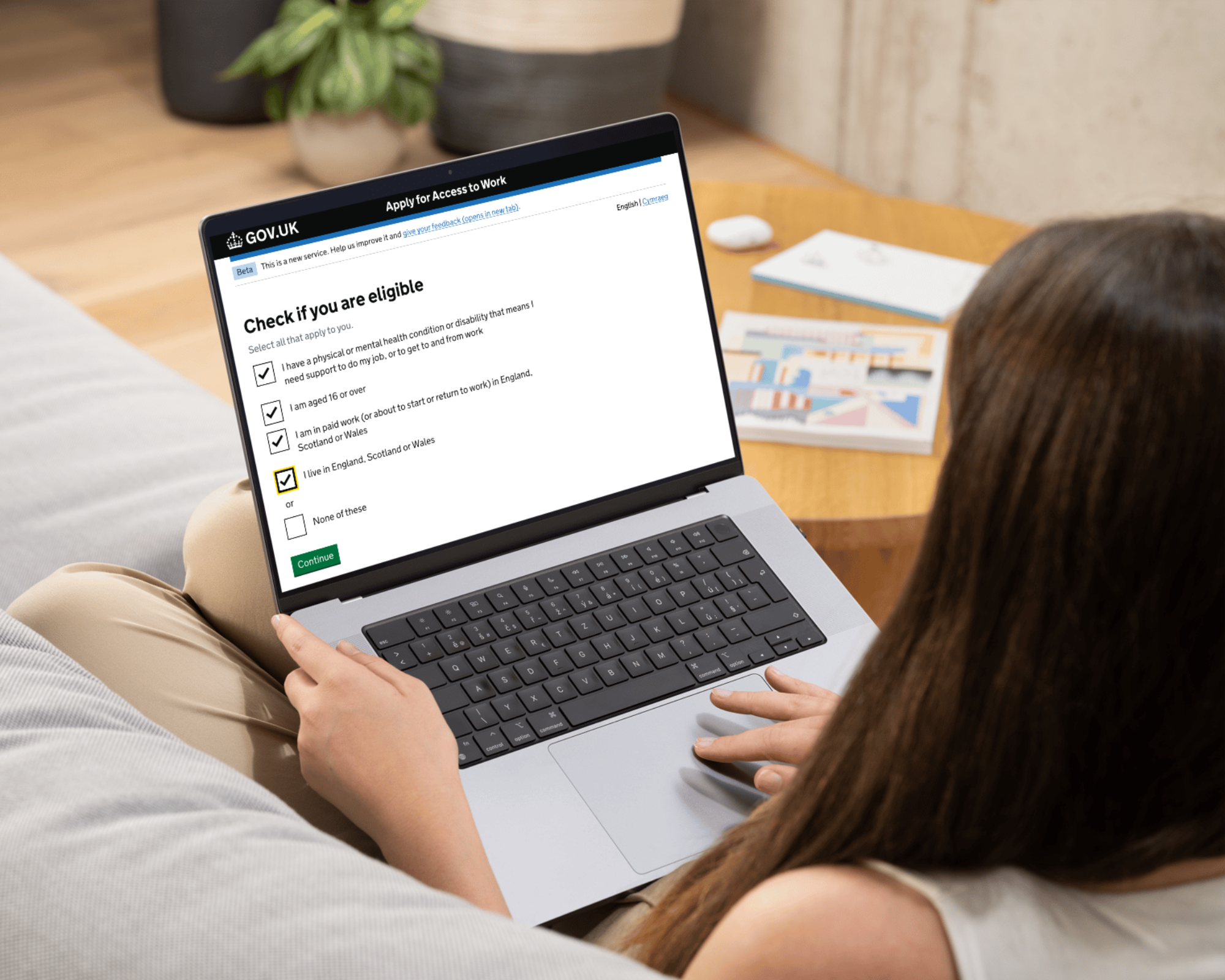
You need to be in paid work (or about to start), aged 16 or over, and living in England, Scotland, or Wales.
It covers a wide range of conditions including autism, ADHD, dyslexia, anxiety, depression, chronic pain, mobility impairments, hearing and vision impairments, and many more.
It’s a grant, not a loan, and it doesn’t affect your other benefits.
Self-employed people, apprentices, and people on internships can apply too.
The application process can feel overwhelming, but you can get help with it.
What is Access to Work?
Access to Work is a government-funded grant scheme run by the Department for Work and Pensions (DWP). It provides practical and financial support to help people with a disability or health condition overcome barriers at work. It can fund things like specialist equipment, assistive technology, support workers, transport costs, coaching, and mental health support. It’s not a benefit, it’s not a loan, and it doesn’t need to be repaid. The maximum annual award is currently £69,260, although most awards are much smaller than that.
Who can get Access to Work?
The basic eligibility criteria for Access to Work are more straightforward than most people expect. To apply, you need to:
Have a disability, health condition, or mental health condition that makes parts of your job harder or makes it difficult to get to and from work
Be aged 16 or over (there’s no upper age limit)
Be in paid work, about to start paid work, or returning to work
Live and work in England, Scotland, or Wales
Paid work includes full-time and part-time employment, self-employment, apprenticeships, internships, and work experience placements. There are no minimum hours you need to be working to qualify.
A few things worth knowing upfront: you don’t need a formal diagnosis to apply. You just need to be able to explain what your needs are and how your condition affects your work. And applying for Access to Work won’t affect any other benefits you receive.
If you’re self-employed, you can still apply, but you’ll need to provide some additional evidence of trading (such as a business plan and a UTR number). I have a separate post covering the self-employed process in detail.
There are a few exceptions. Voluntary work isn’t covered by Access to Work, and civil servants need to get workplace adjustments through their employer directly rather than through the scheme. If you’re in a less straightforward employment situation (agency work, non-traditional roles, or complex employer arrangements), I’ve written a separate post covers these cases.

What conditions does Access to Work cover?
Access to Work isn’t limited to a specific list of conditions. If your condition affects your ability to do your job or to get to and from work, you may be eligible regardless of what the condition is. That said, it can help to see examples, so here are some of the most common conditions that people successfully apply with.
Neurodivergent conditions
Autism, ADHD, dyslexia, dyspraxia, dyscalculia, and sensory processing differences. These are some of the most common reasons people apply for Access to Work, often for support like coaching, assistive software, support workers, or adjustments to how information is shared with you at work.
Mental health conditions
Anxiety disorders (including generalised anxiety and panic disorder), depression, PTSD, bipolar disorder, OCD, and other mental health conditions that affect your ability to work. Access to Work also has a dedicated Mental Health Support Service that provides up to nine months of one-to-one support from a specialist.
Physical disabilities and chronic conditions
Mobility impairments, vision or hearing impairments, limb differences, chronic pain conditions (such as arthritis or fibromyalgia), epilepsy, multiple sclerosis, diabetes, chronic fatigue syndrome (CFS/ME), and respiratory conditions. Support often covers specialist equipment, adapted furniture, or transport costs.
Temporary conditions
Recovery from surgery, broken bones, severe injuries, complications from pregnancy, or extended illness (such as long COVID). Access to Work can provide short-term support while you recover.
If you’re unsure whether your condition qualifies, the simplest thing to do is apply. You can also reach out to me and we can talk through your situation.

What can Access to Work pay for?
The types of support Access to Work can fund include:
Specialist equipment and assistive technology (e.g. speech-to-text software, screen readers, noise-cancelling headphones)
Adaptations to your workspace or existing equipment
A support worker to help with tasks that are harder for you (e.g. managing your inbox, preparing for meetings, staying on top of deadlines)
Transport costs if you can’t use public transport to get to work
Mental health support from a specialist provider
Coaching to help you develop strategies for managing your work
Disability awareness training for your colleagues
It’s important to understand that Access to Work doesn’t replace your employer’s legal duty to make reasonable adjustments. It sits alongside those adjustments and covers support that goes beyond what your employer is legally required to provide.
If you want a more detailed picture of what the assessment process looks like and how support is decided, I’ve written about what happens during an Access to Work assessment.
How do you apply?
You can apply online through gov.uk or by phone via the Access to Work helpline (0800 121 7479). The application form itself is short and doesn’t require a lot of detail at the application stage. You’ll only be able to give an outline of your condition and your work situation and list what support options you feel would help you. You’ll be contacted for a more detailed assessment conversation where you can explain your needs properly later down in the process, once your application gets picked up by a case manager.
Applications are currently taking around 14 to 18 months to process, so it’s worth applying as early as you can. Access to Work will only fund support from the date you apply, not from the date you’re approved, so the sooner you get your application in, the better.
If you want a step-by-step walkthrough of the full application process, there’s a detailed guide to completing your Access to Work application that covers exactly what to expect at each stage.

Do you want help with your application?
If the process feels overwhelming, or you’re not sure whether you’d qualify, I can help. I work with neurodivergent and disabled people on their Access to Work applications every day, and I know what a strong application looks like and where things tend to go wrong.
Book a consultation if you’d like hands-on support with your application, from working out what to ask for through to getting your grant set up.
I also run a free 5-week email course that breaks down the Access to Work process step by step. If you’d rather start there and see how you get on, that’s a great place to begin.
Frequently asked questions
Do I need a diagnosis to apply for Access to Work?
No. You don’t need a formal diagnosis. You need to be able to explain what your condition is and how it affects your work, but a clear self-disclosure with examples is enough to get started.
Can employers refuse Access to Work?
Employers would be breaking the law to provide adjustments to their disabled employees if they refused the scheme, but they will need to cooperate with specific adjustments (for example, agreeing to changes to your workspace). In practice, employers rarely refuse, especially because Access to Work usually covers the costs, which removes the financial objection. It’s important you have a conversation with your employer about what the scheme is so they understand their obligations and don’t accidentally sabotage the process.
Does Access to Work affect my other benefits?
No. Access to Work doesn’t affect other benefits like Universal Credit or PIP. It’s a completely separate grant.
Who pays for the equipment?
The Access to Work grant covers most or all of the costs, unless cost sharing has been decided. For self-employed people and new employees, DWP usually funds 100%. For existing employees in larger organisations, the employer may be asked to contribute 20% towards costs between £1,000 and £10,000, with DWP covering the rest. In all cases, the applicant or their employee is expected to pay upfront and then claim the money back from Access to Work, but there are providers who are happy to be paid by Access to Work directly.
Can I get Access to Work for ADHD?
Yes. ADHD is one of the most common conditions people apply with. Support can include coaching, assistive technology, a support worker, or workplace adjustments to help with focus, organisation, and managing your workload.