Can you get Access to Work if you're self-employed?

If you're self-employed, freelancing, or running a small business, chances are you chose it at least partly because traditional employment wasn't working for you. Whether you made the switch because of the rigidity, the sensory environment, the unpredictable social demands, or just the impossibility of performing at someone else's pace for eight hours a day, self-employment gave you control over how, when, and where you work, and that flexibility might be the only reason you're able to work at all.
But flexibility doesn't cover the costs that come with access needs, things like the assistive software that keeps you productive, the ergonomic furniture that means you can actually sit at your desk without pain, or the taxi fares to client meetings because public transport isn't an option for you. When you're self-employed, all of that comes out of your own pocket, and it adds up fast.
The good news is that Access to Work is a UK government grant that can fund exactly these kinds of adjustments, and yes, it is available to self-employed people. You don't have to be employed by someone else to qualify, and you don't have to pay it back.
Key takeaways
Access to Work is available to self-employed people, sole traders, freelancers, and small business owners, not just employees.
It's a government grant, not a loan, and it doesn't need to be repaid.
It can fund things like assistive technology, ergonomic equipment, support workers, transport costs, and mental health support.
You'll usually need to show a minimum annual turnover of £6,708, although exceptions can apply.
Applications are taking 18 months to process as of August 2026, so it's worth applying early.
You can get help with the application process if it feels overwhelming.
What is Access to Work?
Access to Work is a government-funded grant scheme that provides practical support for people with a disability, health condition, or access need that makes parts of their job harder. It's not a loan, it's not means-tested, and it's not a benefit. It's a grant designed to remove barriers so you can work effectively and sustainably, whether you're employed or running your own business. The maximum annual award for 2026/27 is £69,260, although most awards are significantly smaller than that.
Can self-employed people apply for Access to Work?
Yes. Self-employed people, including sole traders, freelancers, and small business owners, can apply for Access to Work if they meet the eligibility criteria. You don't need to be on someone else's payroll to qualify.
To apply as a self-employed person, you'll need to show that you have a Unique Tax Reference (UTR) number, that you can provide some evidence of trading (such as accounts or invoices), and you will need a business plan to show your business is viable. Most applicants will also need to demonstrate an annual turnover above the lower earnings limit, which is currently £6,708 per year for 2026/27, although you may still be able to apply if you earn less in some circumstances.
You'll also need to meet the general Access to Work eligibility criteria: be aged 16 or over, be doing paid work (or about to start) in the UK, and be able to show that your condition makes certain parts of your work harder without support. You don't need a formal diagnosis to apply, but you do need to be able to explain what your access needs are.
What can Access to Work pay for?
The range of things Access to Work can fund is broader than most people realise. It covers practical adjustments that help you do your job, and because everyone's access needs are different, there's no fixed menu of what you can ask for (but it’s worth being aware of things Access to Work will never fund). Here are some examples of what self-employed people commonly get funding for:
Specialist equipment and assistive software (e.g. speech-to-text tools, screen readers, noise-cancelling headphones)
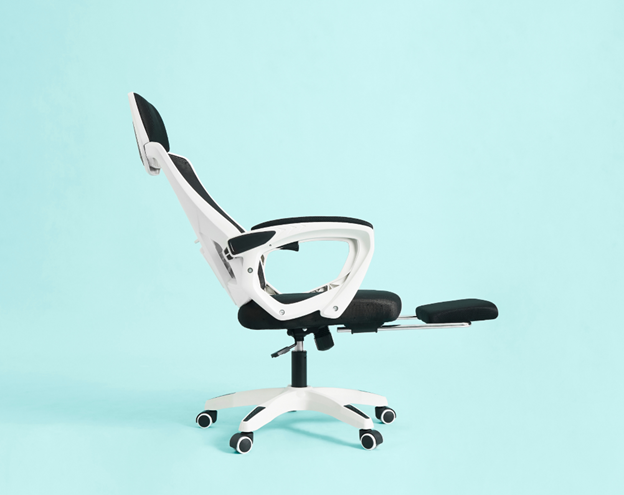
Ergonomic furniture (e.g. a height-adjustable desk, an adapted office chair)
A support worker to help with tasks you find difficult (e.g. managing your inbox, keeping track of deadlines, preparing for meetings)
Accessible transport if your condition means you cannot use public transport (e.g. taxi fares to client meetings)
Mental health support to help manage work-related stress or anxiety
Adaptations to existing equipment
Disability awareness training for people you work with
If you want to see more examples of what Access to Work has funded in practice, and how to think about what to ask for, I've written a detailed post about what happens during an ATW assessment that covers this in more depth.

How do you apply for Access to Work when you're self-employed?
The application process itself is the same whether you're employed or self-employed, although you'll need to provide some extra documentation to prove your business is real and active. It's worth starting the process early, because applications are currently taking around 18 months to be processed, and Access to Work can fund support from the date you apply, not from the date you're approved, backdating your claim. If you buy equipment or arrange support before your application date, you won't be reimbursed for it.
Here's the process:
1. Gather your evidence. You'll need proof that you're self-employed, such as your UTR number from HMRC as a sole trader, recent invoices, and a business plan. Having this ready before you apply saves time later.
2. Apply through gov.uk. You can apply online or by phone. The form's text boxes are short, so you only need to give an outline at this stage. You can even write “I'll provide these details later” and give the full information during your assessment.
3. Attend an assessment. This is a conversation with an assessor who will discuss your job, your access needs, and what support would help you work effectively. They'll then recommend a package of support tailored to your situation.
4. Set up your support. If Access to Work approves the assessment’s recommendations, you'll need to arrange whatever support was agreed (meaning you’ll be buying equipment, hiring a support worker, booking transport) and keep receipts and records for claims.
What makes it harder for self-employed applicants?
Applying for Access to Work can feel like a big task on its own, and when you're self-employed and already managing your health, your access needs, and your entire business, the admin overhead can feel genuinely overwhelming. A few things that are worth knowing upfront because they trip self-employed applicants up more than employees:
Apply as early as you can. Processing times are long right now (18 months), and Access to Work won't fund anything from before your application date. Even if you're not sure exactly what you need yet, getting your application in starts the clock.
Get your trading evidence organised early. Delays often happen because applicants take a while to gather the proof of self-employment that Access to Work asks for. Having invoices, contracts, bank statements, and a comprehensive business plan ready to send immediately can shave weeks off the process and save you from being rejected.
Ask for adjustments to the process itself. If the forms or assessment calls feel overwhelming (especially if you're neurodivergent, or your energy and capacity fluctuate), you have the right to ask for the process to be adapted. You can request communication in a format that works for you as a reasonable adjustment, or bring someone along to help you process information during your calls.
Do you want help with your application?
I'm Max, and Access to Work is one of the things I know inside out. Like you, I considered self-employment for years before I took the plunge, and Access to Work has made a real difference to how sustainable my own business is.
If the application process feels overwhelming, or you just want someone to check you're approaching it the right way, I can help you from application through to getting your grant set up. I work with neurodivergent and disabled self-employed people all the time, and I know what a strong application looks like and what tends to go wrong. Book a consultation to get started.

Frequently asked questions
How much is the Access to Work grant?
The maximum annual award for 2026/27 is £69,260 per person. Most awards are considerably less than that, though. The actual amount depends on what support you need and what Access to Work agrees is reasonable for your situation and work-related.
Can I apply before my business makes a profit?
Yes. You can apply if you're in paid work, about to start, or have a confirmed offer. You'll need to provide evidence (such as a signed contract, booking confirmation, recent invoices, and a comprehensive business plan), but you don't need to be profitable or meet the lower earnings limit when you apply to qualify.
What if I already bought the equipment I need?
Access to Work won't reimburse costs for anything purchased before your application date. This is why applying early matters, even if you're still working out the details of what you need.
Who pays for Access to Work?
The Department for Work and Pensions (DWP) funds Access to Work. It's a government grant, not a loan, meaning it doesn’t have to be paid back. For self-employed applicants, DWP usually funds 100% of the agreed support. Usually, applicants are expected to pay for the granted support upfront, then claim the money back from Access to Work, which can take a few weeks.